Art Through Time
The historical-artistic path of MUSAS
The five rooms on the noble floor of Palazzo Cenci house the historical-artistic path, which brings together works from Santarcangelo and its surrounding area, dating from the Middle Ages and later, up to the 19th century. This is a selection of testimonies from this long period, often unrelated to each other, but offering fascinating glimpses into the condition of the town, its life, culture, religiosity, notable figures, and its connections to both nearby and distant centers.
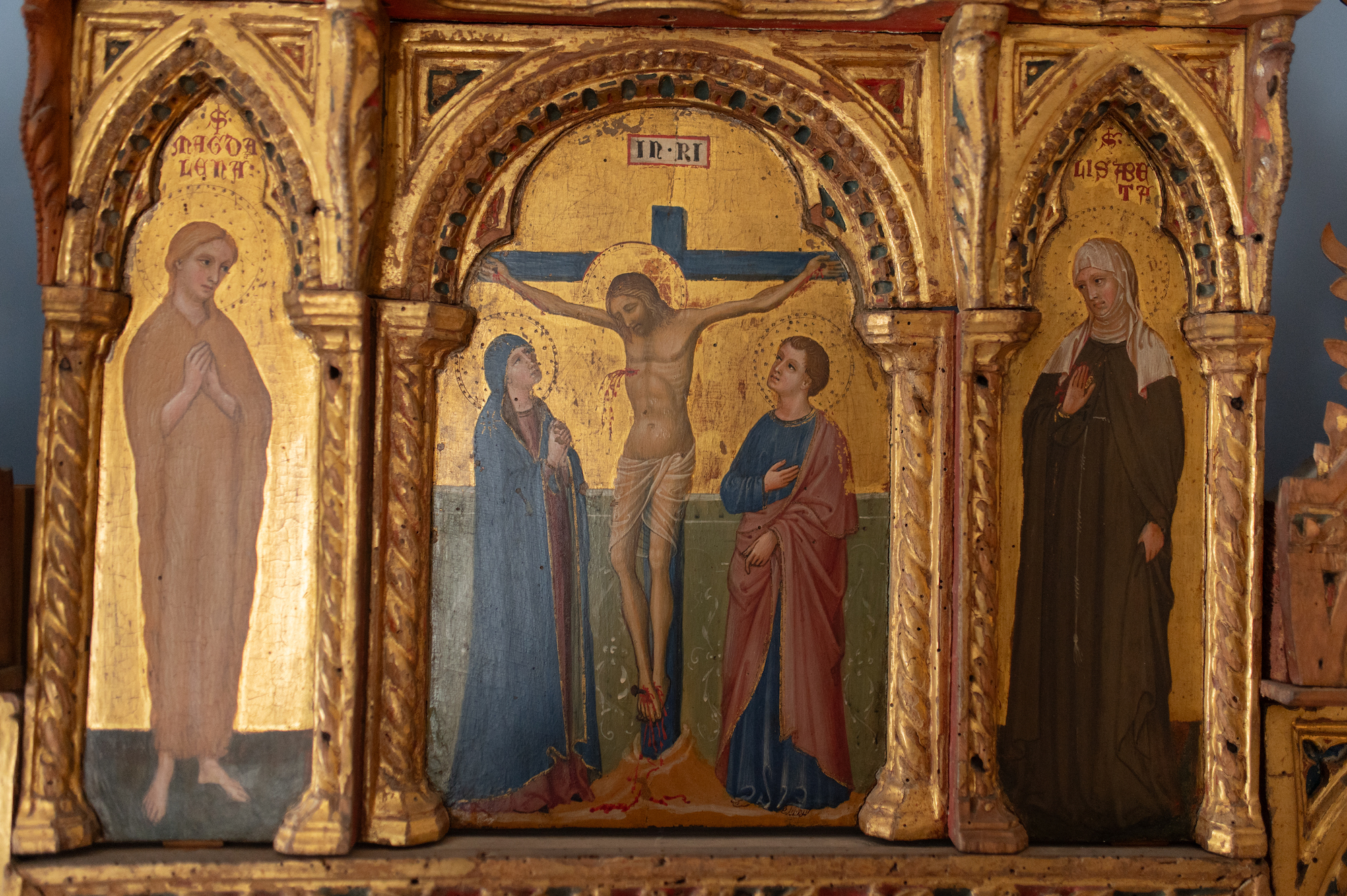
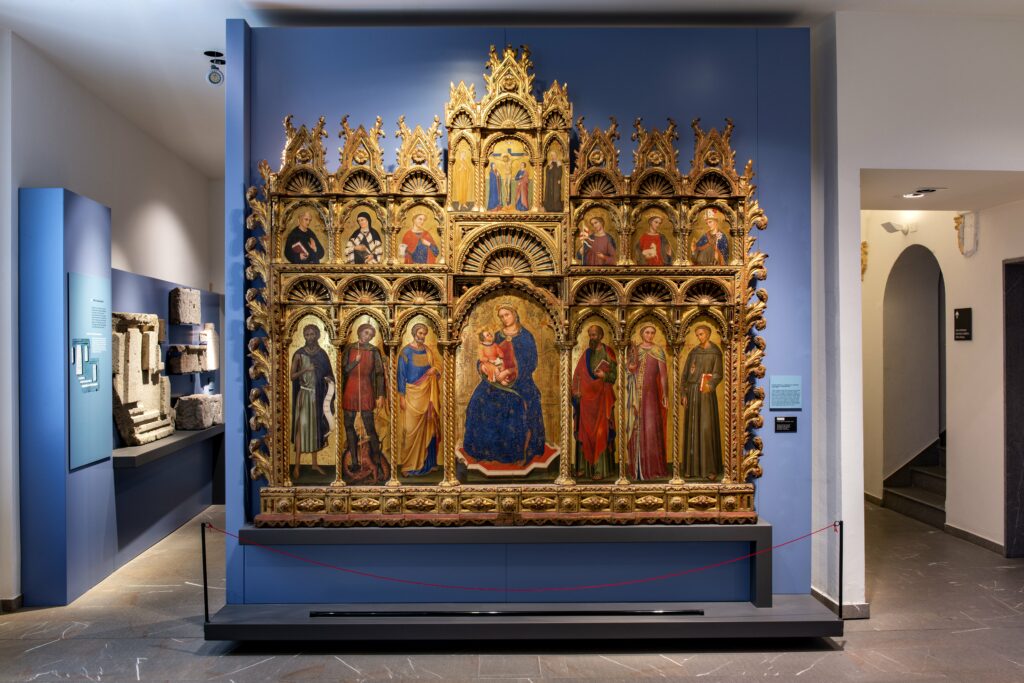
Among these, there are great masterpieces, including the 14th-century polyptych by Jacobello di Bonomo, of incredible beauty.
In addition to these works of art owned by the municipality, over time, interventions by contemporary artists have been added, which today form an integral part of the museum’s path.
The Pagus Acervolanus
Room 5. The Pieve
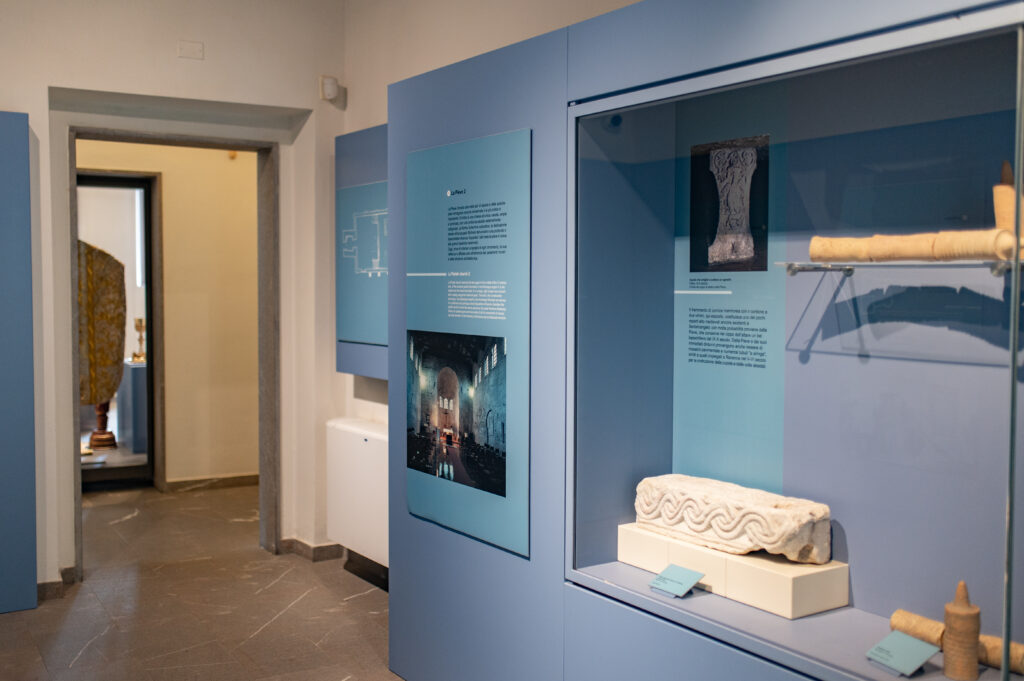
The site where the Church of San Michele Arcangelo was built in the 6th century, about 1 km from the present town center, has historically represented the heart of the territory. Its favorable location in a flat area, close to communication routes and primary resources, made it a central gathering point. In late antiquity, when the Roman settlement began to disappear and the scattered population seemed to shrink, the activity of the ceramic workshops around San Michele remained vital.
These workshops produced tubuli (small clay tubes), bricks, and lamps modeled after designs from Africa, indicating continued contact with major centers like Rimini and possibly Ravenna.
San Francesco Rediscovered: Furnishings from the Ancient Church
Room 6. Middle Ages and Renaissance
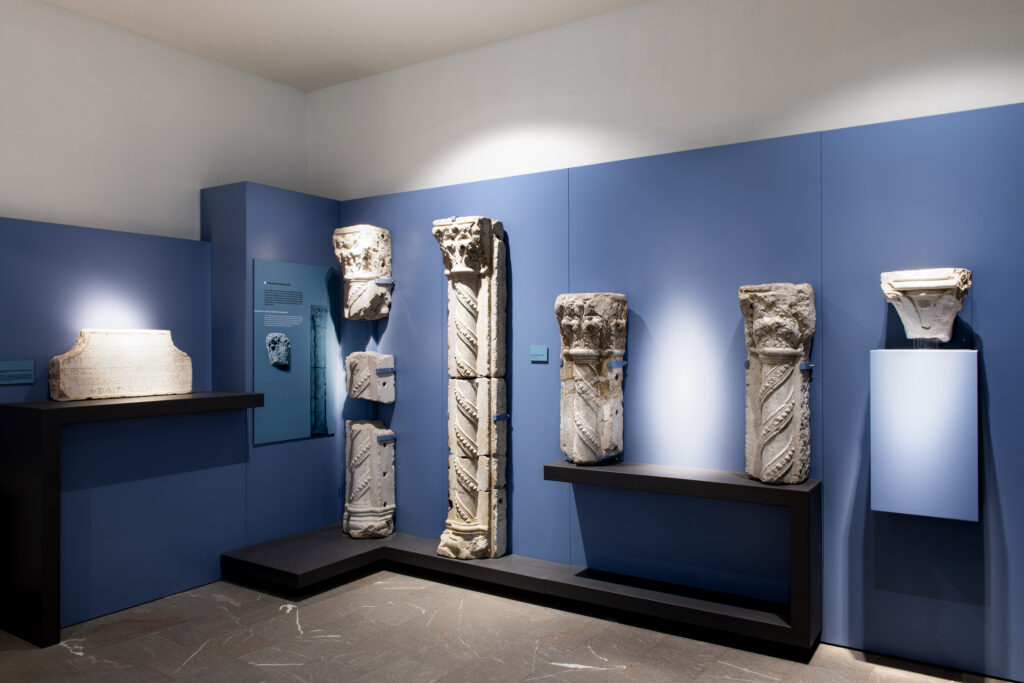
In the Middle Ages, the town developed on Monte Giove hill, dominated by the Malatesta Fortress and enclosed by walls. By the 15th century, it had taken on the layout that still defines the historic center today, with its public buildings, noble residences, and places of worship. From these come the valuable architectural elements and carved stone fragments on display.
This room largely reconstructs the Church of San Francesco, beginning with its large 16th-century wrought iron gate. The church, founded in the 13th century outside the town walls along the ancient Via Emilia, was later deconsecrated after serving as a military depot and pipe factory. It was ultimately demolished in 1885–86 to make way for the construction of the new school building.
The Seventeenth Century
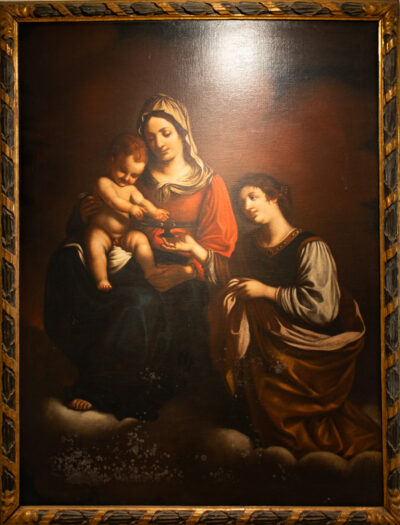
Room 7. The Seventeenth Century
The 17th century was a time of great artistic fervor, which was also reflected in Santarcangelo.
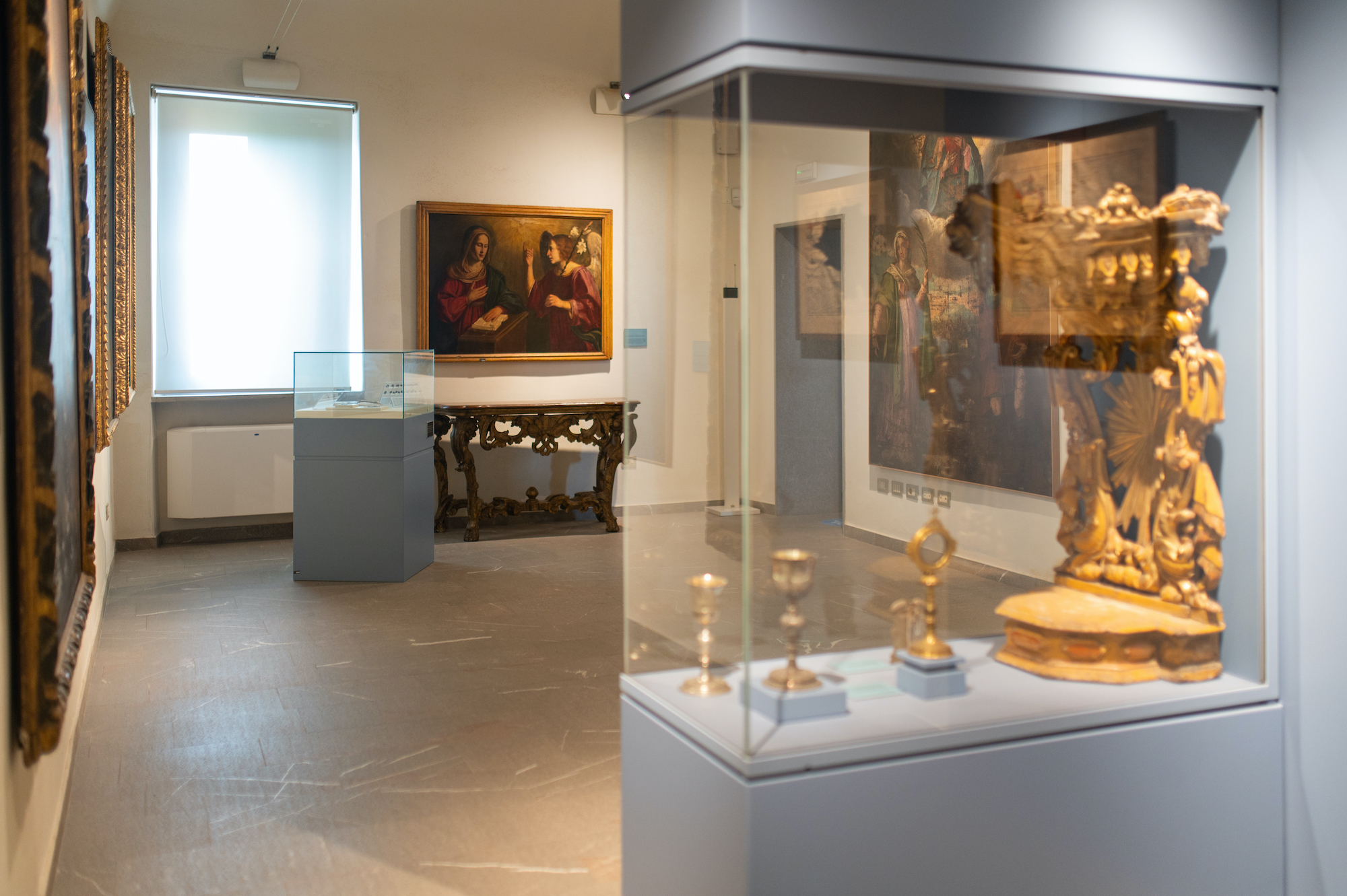
While the finest paintings from this period are still housed in the town’s churches (the Collegiata and the Church of the Suffragio), MUSAS presents a selection of significant works in both Mannerist and Naturalist styles by local artists as well as painters from Rome and Bologna: the Annunciation by Giulio Bistolli, painted around 1650, an artist active in Rimini and the Montefeltro area, displayed above a Baroque “console”, an 18th-century carved and gilded wooden table; a Madonna of the Rosary by an unknown artist, possibly Roman; a canvas depicting Saint John the Baptist, also by an unidentified artist, possibly of the Roman school; and a painting of the Madonna and Saint Lucy offering her eyes to the Child, by Cesare Gennari, dated around 1670, which is a copy of a work by Guercino.
The Century of the Pope: Clement XIV
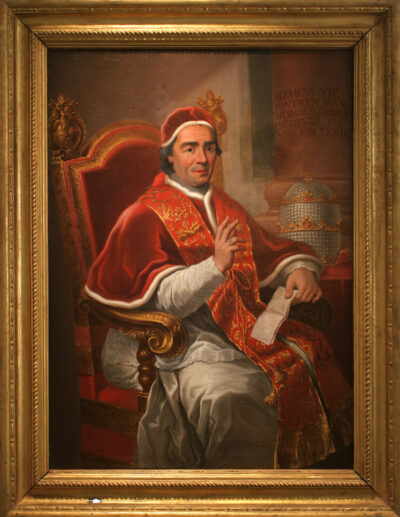
Room 8. The Eighteenth Century
The eighteenth century represents one of the most splendid periods for Santarcangelo, marked by the rise
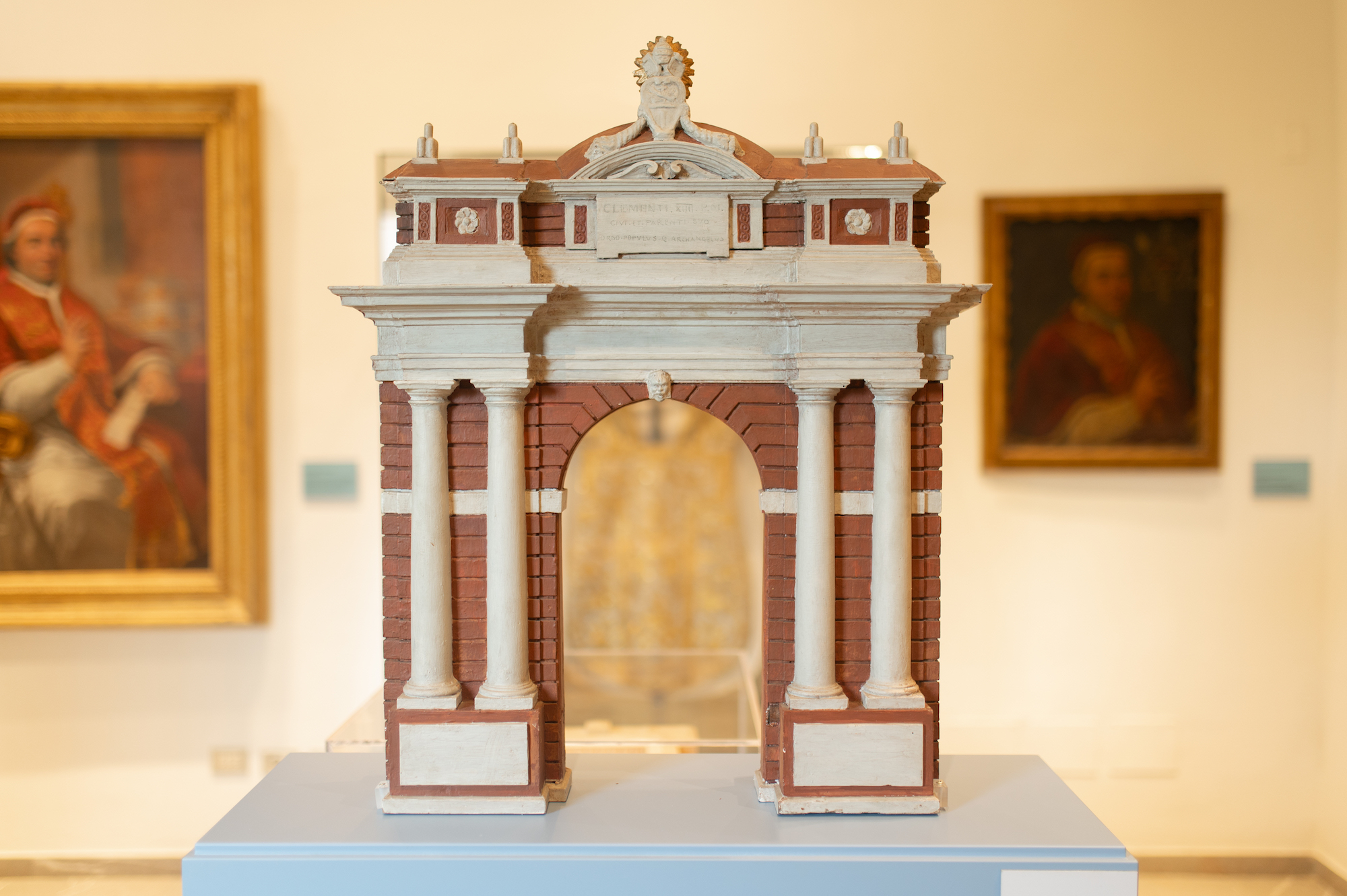
of significant religious buildings such as the Collegiata and the Monache Church, as well as the honorific arch dedicated to Pope Clement XIV in 1777, a key figure in the local history.
The pope was born in Santarcangelo in 1705 to the Ganganelli family, becoming supreme pontiff in 1769 until his death in 1774. He is particularly remembered for dissolving the Jesuit order.
The honorific arch, located along the Via Emilia, features a central archway carved from a brick-faced wall, adorned with Doric columns, an entablature, and white marble decorations.
In this room of the museum, there is a painted wooden model of the arch, created to scale by Cosimo Morelli in 1773, alongside a miniature model of his project for the new Market Square.
An Artistic City
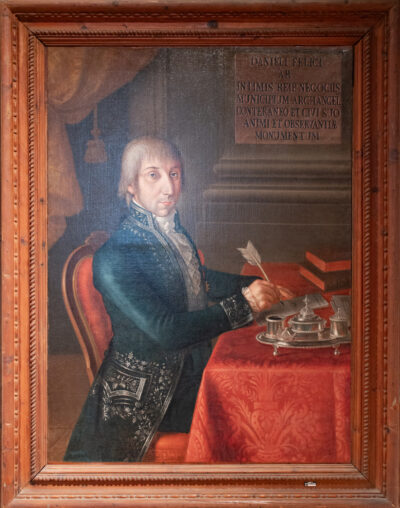
Room 9. The Nineteenth Century
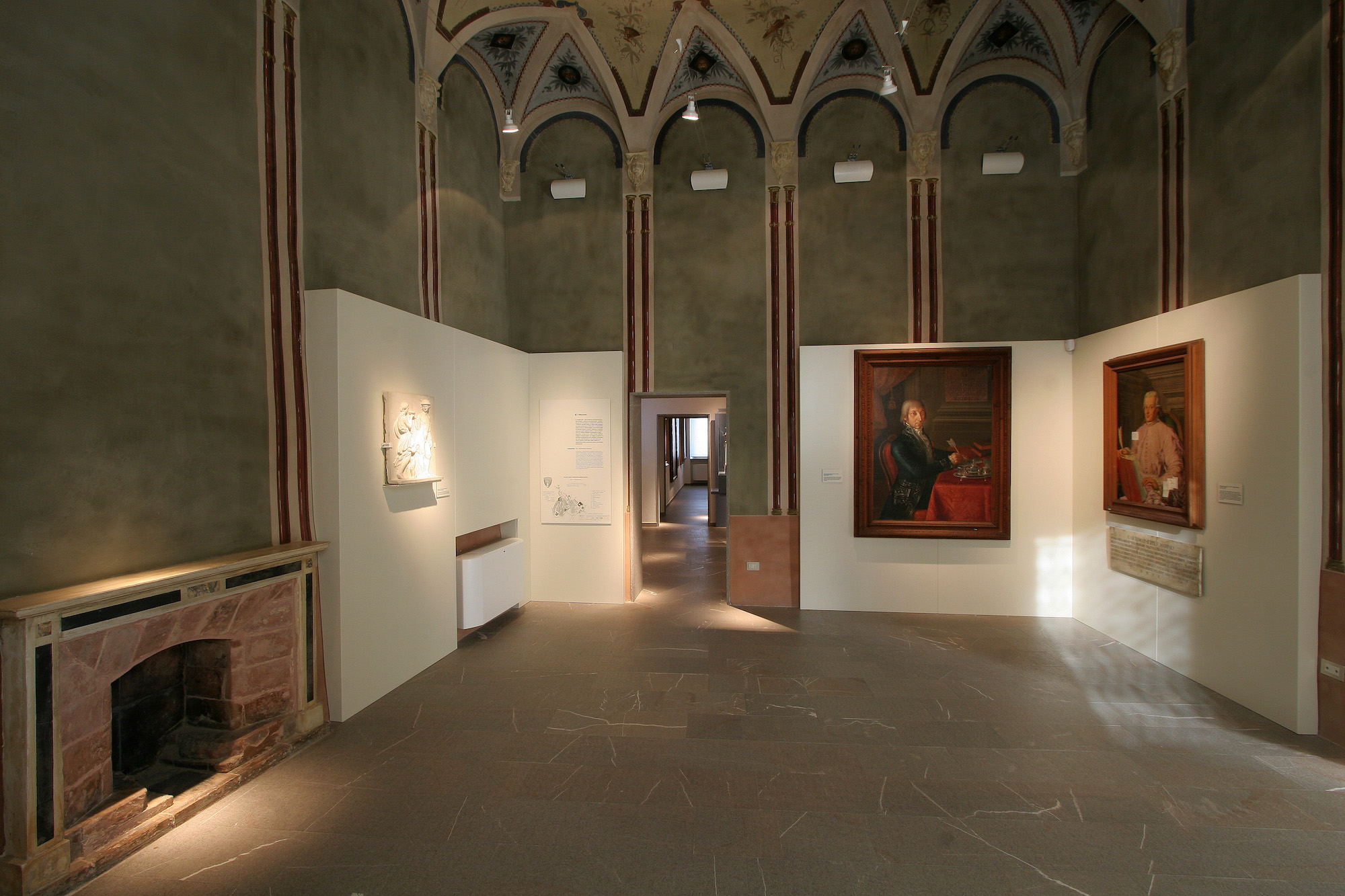
This room is dedicated to 19th-century works, a period that also saw the frescoes decorating its ceiling and walls. The frescoes depict pairs of red columns between gray walls that support vaulted ceilings adorned with floral motifs.
During this time, Santarcangelo was home to prominent figures in the literary and artistic fields. Among them were scholars Gaetano Marini and Marino Marini, painters Giovan Battista Galliadi and Antonio Alessi, and sculptors Sisto Gallavotti and Gaetano Lombardini. The latter was the creator of a valuable white stone bas-relief representing Mercury. Lombardini, a student of Canova, worked in Rome, Forlì, and Cesena, leaving Santarcangelo other significant works displayed in the Collegiata church.
A Contemporary Art Journey
MUSAS frequently hosts contemporary art exhibitions that engage with the permanent collection and the artistic initiatives present in the city. This ongoing exploration fosters a dynamic environment that allows the museum to offer different interpretations of its heritage, making it accessible to a broader and more diverse audience.
Some contemporary installations have become part of the museum’s permanent setup and can be found throughout the museum’s archaeological and historical-artistic paths: the artwork “Girolimetti” by the artist Andreco, located at the top of the stairs from Room 1. The Furnace, and Leonardo Blanco’s “Volo nuziale” (“Nuptial Flight”) emerging from the chimneys in both Room 3. Roman Era and Room 9. The 19th Century.
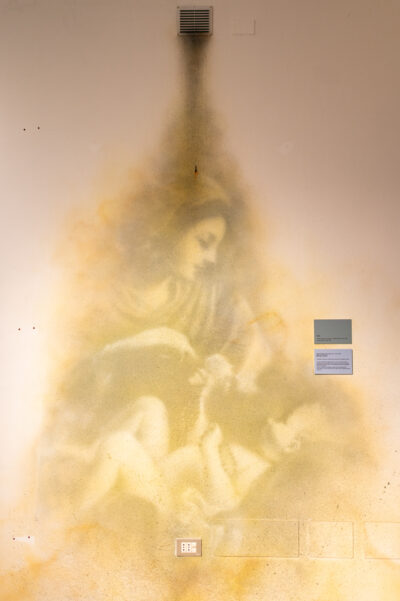
Additionally, several spray-painted wall works by Eron, one of the most internationally renowned street artists, are present, including “History, wall memory and soul” in the Roman archaeology section and “Guido Cagnacci is gone…but the soul is in the wall” in the 17th-century room. The third piece, “Don’t cry”, frames the final letter written to his mother by one of the three partisans hanged in Rimini on August 16, 1944.
Gallery